
UNDERSTANDING INTERVENTIONAL RADIOLOGY
What is interventional radiology?
Precise, image-guided treatment through small access points.
UNDERSTANDING IR
Treatment guided by live imaging
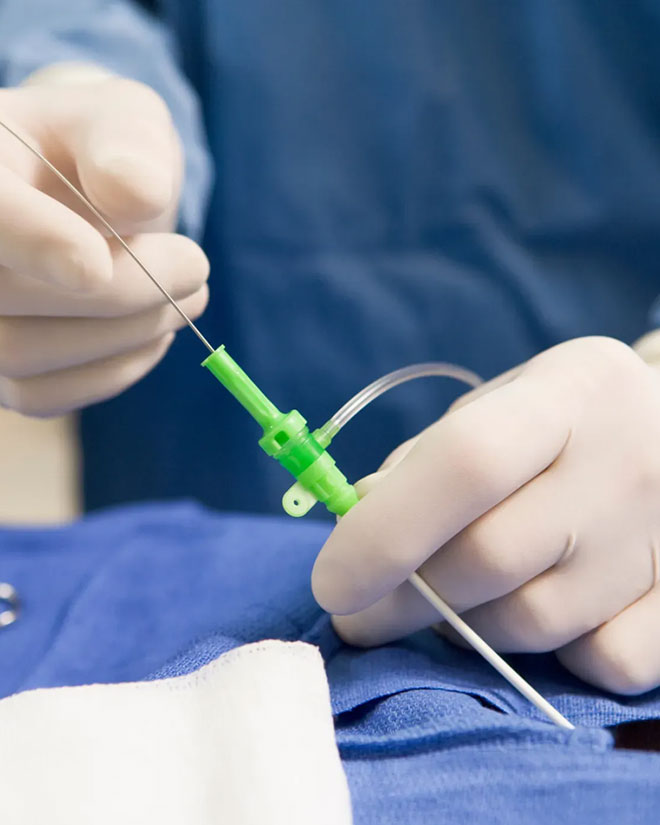
Interventional radiology (IR) is a medical specialty that uses imaging to guide diagnosis and treatment inside the body. Instead of relying on a large surgical opening, an interventional radiologist can guide fine instruments through a small skin opening or blood vessel to a specific target.
Live X-ray, ultrasound, CT, or other imaging helps the specialist see the instruments and adjust their position during the procedure. The approach is selected for the condition and the person’s individual health needs.
In simple terms: imaging shows the way in, while a thin catheter or needle delivers treatment precisely where it is needed.
HOW IT WORKS
A planned procedure, guided step by step
The exact plan depends on the condition being treated. Your specialist explains the proposed procedure, expected benefits, possible risks, and alternatives before you decide how to proceed.
STEP 1
Assessment & planning
Your symptoms, medical history, examination, and imaging are reviewed to decide whether an image-guided approach may be suitable.
STEP 2
A small access point
The skin is cleaned and numbed. A fine needle or catheter is introduced through a small opening, often in the skin or a blood vessel.
STEP 3
Image-guided treatment
X-ray, ultrasound, or CT helps guide the instrument to the target, where the planned treatment or diagnostic sample is performed.
STEP 4
Recovery & follow-up
The access site is cared for and your team explains recovery instructions. Follow-up is planned around the procedure and your needs.
WHAT IR CAN DO
Treatments are tailored to the target
Interventional radiology includes a range of procedures. Examples offered or assessed by the clinic include:
EMBOLISATION
Block or reduce blood flow
A catheter can deliver small particles or other materials to selected blood vessels. Embolisation may be considered for conditions such as uterine fibroids, enlarged prostate, varicocele, or selected tumours.
RESTORE OR RELIEVE
Improve flow or drainage
Angioplasty and stenting can help open selected narrowed vessels. Image-guided drainage may relieve a fluid collection or obstruction when clinically appropriate.
DIAGNOSE OR TARGET
Sample or treat a precise area
Image-guided biopsy can obtain tissue for diagnosis. Some tumours may be considered for targeted ablation or radioembolisation as part of a specialist treatment plan.
POTENTIAL ADVANTAGES
Why patients and doctors consider IR
For some conditions, an image-guided procedure may provide an option alongside surgery or medicines. The right choice depends on the diagnosis, evidence, overall health, and personal preferences.
SMALL ACCESS
A smaller skin opening
Many procedures use a small access point rather than the larger incision needed for open surgery. The size and location depend on the procedure.
ANAESTHESIA OPTIONS
Care planned for the procedure
Some procedures can be performed with local anaesthesia or sedation. General anaesthesia may be appropriate for others.
RECOVERY
A stay suited to the treatment
Some procedures are day treatments; others need observation or a hospital stay. Your care team will explain what to expect.
PERSONALISED OPTIONS
A considered treatment plan
Your specialist discusses expected benefits, risks, alternatives, and whether the procedure fits your individual circumstances.
YOUR CONSULTATION
Is interventional radiology right for you?
Not every condition or patient is suited to an image-guided procedure. Your interventional radiologist will review your diagnosis, imaging, medical history, medicines, and goals before recommending options.
Bring your referral, relevant reports and imaging, a current medicine list, and details of allergies or other health conditions. You can ask about likely recovery, follow-up, alternatives, and costs during your consultation.
Every treatment has possible risks. Your clinician will explain the benefits and limitations relevant to your case so you can make an informed decision.
APPOINTMENTS
Ready to discuss your options?
Call Green Life Interventional Radiology Center to arrange an appointment or ask a general question.
Green Life Interventional Radiology Center
Image-guided, minimally invasive care in Dhaka.
Treatments
Practice
Location & appointments
Appointments
+880 1329 272207
+880 1330 993297
ircgreenlife@gmail.com
Location
Room 2002, Green Life Hospital Ltd.
32, Green Road, Dhaka
The information on this website is general in nature and is not a substitute for professional medical advice. Always discuss your individual circumstances with your doctor. A referral may be required for specialist consultation.
© 2026 Green Life Interventional Radiology Center. All rights reserved.